From the Blog
Finance Tips & Insights
23 articles across 6 topics — practical guides to help you spend less, save more, and make smarter money decisions.

All articles

Best Budget Apps Without Linking a Bank Account: 8 Compared (2026)
Eight budget apps that work without your bank login, compared on free-plan limits, household sharing, file import and export, with every fact sourced in September 2026.

Best Budget Apps for Couples in 2026: 7 Apps Compared by Money Model
Seven couples budget apps compared on partner cost, privacy for personal accounts, bank linking and free plans, with a split example and a first-week setup checklist.

Monarch Money Alternatives for Europe and the UK: 8 Apps Compared (2026)
Monarch Money works only in the US and Canada. Eight alternatives for UK and EU households compared on bank sync, currencies, sharing and price, checked September 2026.

Best Shared Shopping List Apps in 2026: Free, Cross-Platform and Price-Aware
Seven shared shopping list apps compared on Android and iPhone sharing, free plans, voice and prices, plus a household list protocol and a way to estimate the trip before checkout.
Best Receipt Scanner Apps for a Household Budget in 2026
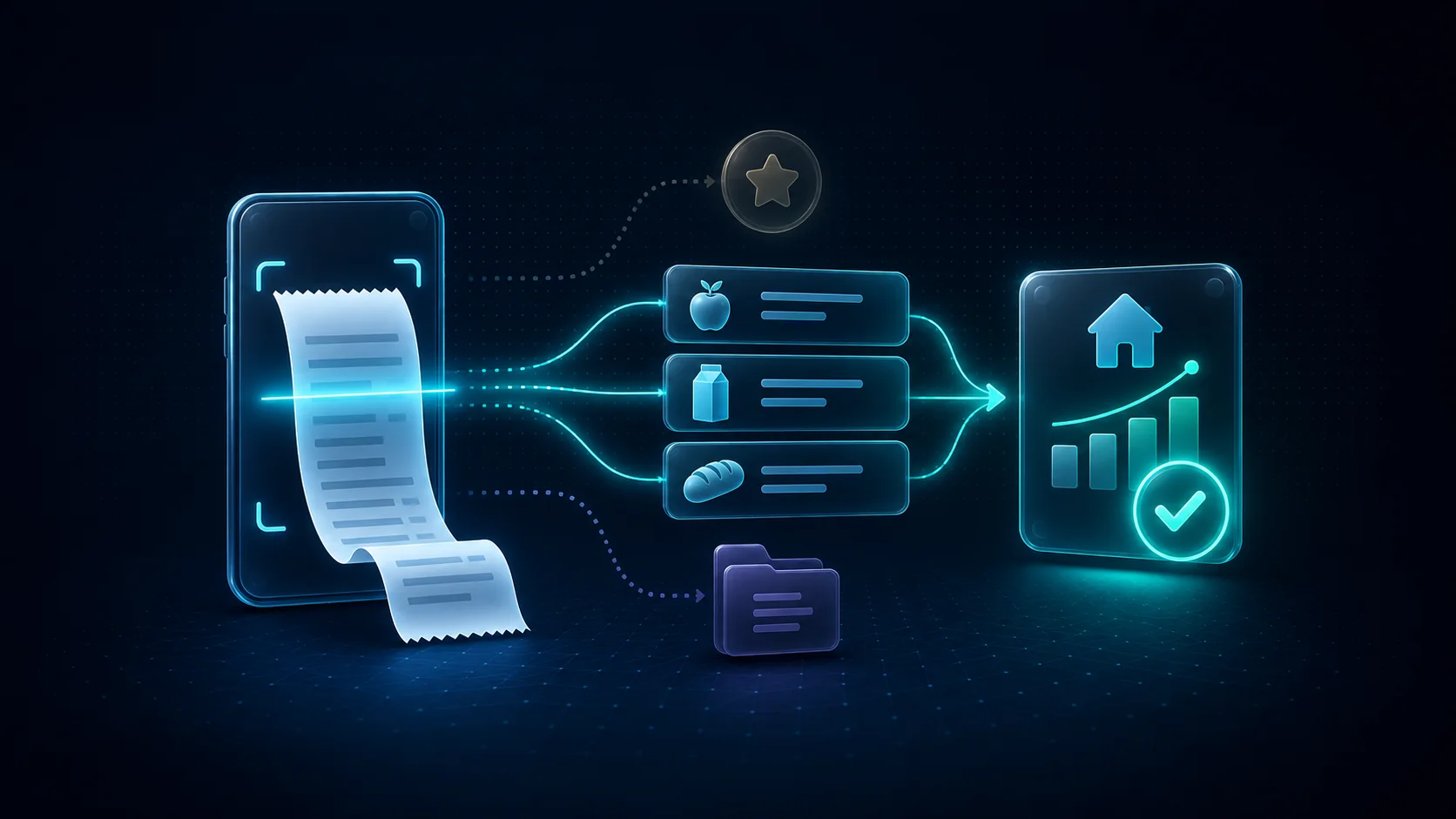
Eight receipt scanner apps compared for households: line items or totals, free scan limits, prices, bank links, sharing, and a 10-receipt test for any trial.

Questions to Ask an AI Budget Assistant
Use bounded prompts for budget summaries, verify every material output, and know when a human or regulated professional should take over.

How to Build a Multi-Currency Family Budget
Choose a base currency, record the rate you actually settled, and reconcile travel or cross-border income without hiding fees.

Why Bank Statements Miss Product-Level Inflation
See what a transaction total can prove, what it hides, and how to combine receipts with CPI or HICP without overstating the data.

How to Track Grocery Prices from Receipts
Turn four weeks of grocery receipts into a comparable price history without confusing promotions, pack sizes, or inflation indexes.

How to Split Household Expenses Fairly
Compare 50/50, proportional, assigned-bill, usage-based, and hybrid methods with a worked unequal-income example and rules for care work and change.

How to Manage a Family Budget Together
Choose a shared-money model, build the household core, divide the work, and run a monthly review without turning every personal purchase into a negotiation.

How Much Families Spend on Food by Country — and What That Means for Your Budget
Romanian households put 23.1% of their budget into food. In Luxembourg it's 9.3% — yet their price-adjusted food expenditure is similar. Here's what national figures actually measure, how to build a useful household benchmark, and when to ignore the average.

How to Track Spending Without Connecting Your Bank Account
You don't need to hand over your banking login to manage money well. Here's how manual and AI-assisted tracking works, a 10-minute weekly reconciliation that keeps it accurate, and what "no bank connection" really does — and doesn't — do for your privacy.

How to Build an Emergency Fund You Can Actually Finish
A practical two-stage emergency fund plan based on your real financial shocks, cash flow, and a clear rule for when the money may be used.

The Weekly Cash-Flow Budget for Irregular Income
Turn uneven income and scattered due dates into an eight-week cash-flow plan that shows shortages before they happen and tells you what to adjust.

Debt Avalanche vs. Snowball: Build a Plan That Lasts
Compare the debt avalanche and snowball methods, choose deliberately, and turn balances, rates, minimums, and one extra payment into a repeatable plan.

How to Audit Your Expenses Like a Financial Planner
A useful expense audit is not about guilt. It is a structured review of recurring charges, category drift, and small habits that quietly change your cash flow.

Behavioral Finance Rules That Make Spending Easier to Control
Expense optimization is not only math. Behavioral finance shows why timing, categories, defaults, and friction shape how we spend.

The Subscription Audit: Find the Recurring Expenses You Forgot
The fastest savings often come from expenses that renew quietly. A subscription audit helps you catch trials, duplicates, unused plans, and price creep.

What an AI Finance Assistant Should Actually Do for You
Most finance apps ask you to do the work. A useful AI finance assistant records, organizes, checks, and explains your money in one conversation.

Smart Budgeting Without Spreadsheets
A budget works best when it is close to your real spending. Here is how category limits, subscriptions, and goals can work together.

Receipt Scanning and Voice Tracking Make Expense Apps Stick
Receipt scanning and voice input cut out most of the typing when you log an expense. Here is what each does in Lumy and what to check before you trust the record.