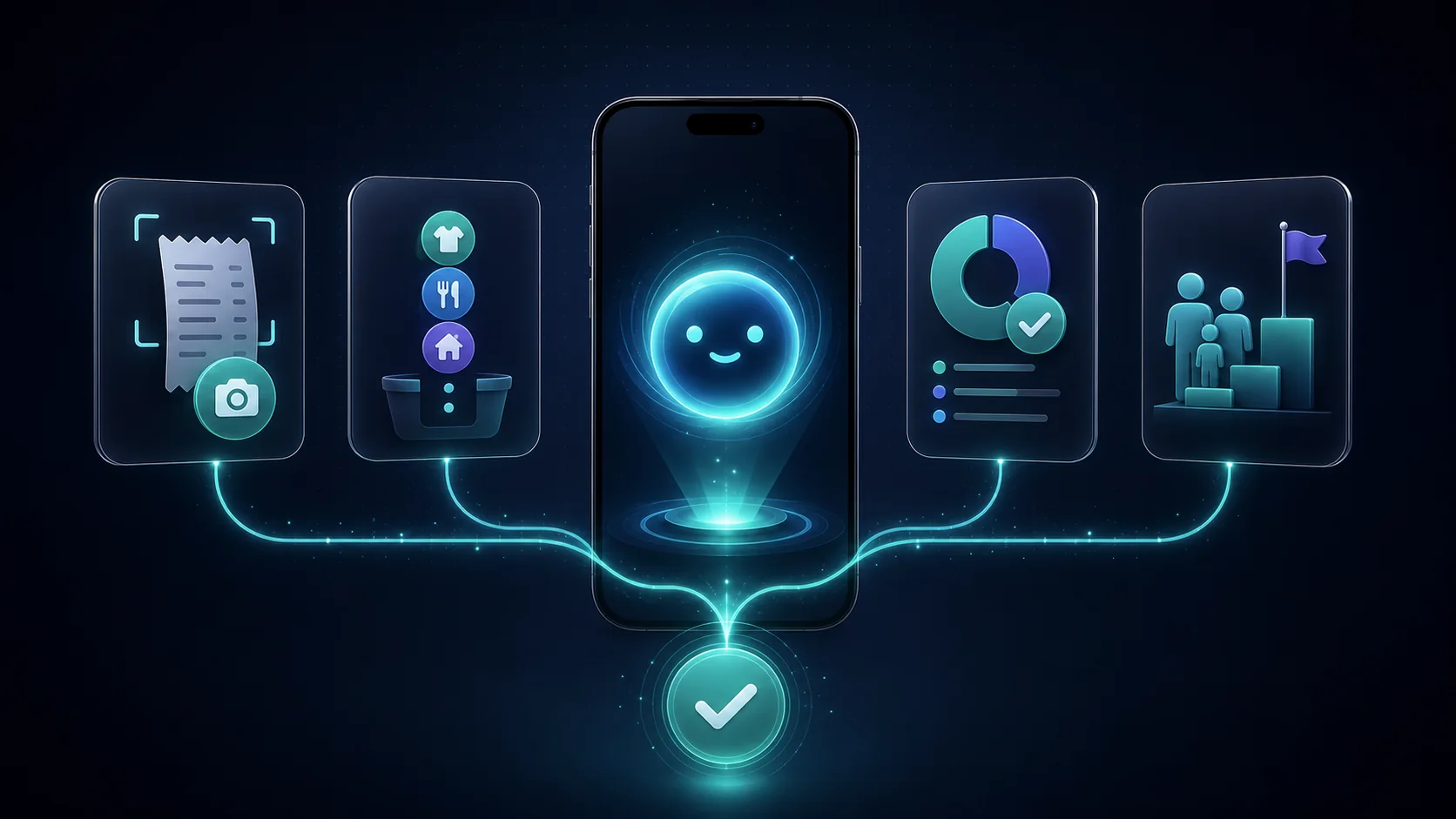
Most personal finance apps give you a dashboard and then quietly hand you a second job. You still have to enter transactions, pick categories, check budgets, remember subscriptions, and interpret charts.
An AI finance assistant should reduce that work. It should let you say what happened with your money, ask what you want to know, and then see the action it took.
It should understand natural money language
People do not think in database fields. They think in sentences like "I spent 45 on groceries yesterday" or "add Netflix as a monthly subscription." A good assistant turns those sentences into clean financial records with the right amount, date, category, and account context.
It should answer with your numbers
Generic advice is easy. Useful answers require your real data. When you ask, "Did I spend more on food this month?" the assistant should search your transactions, compare the right periods, and answer with specific totals.
It should notice patterns you did not ask about
The best assistant is not only reactive. It can flag duplicate charges, category spikes, unused subscriptions, or savings goals that are falling behind. That turns finance tracking from a monthly cleanup into a daily safety net.
It should show its work
When AI changes financial data, trust matters. Lumy uses action cards so each created transaction, updated budget, or added subscription can be reviewed and edited. Nothing important should happen invisibly.
The point is less tapping, more clarity
The future of personal finance apps is not another form with more fields. It is a conversation that can record, explain, and act while keeping you in control.